
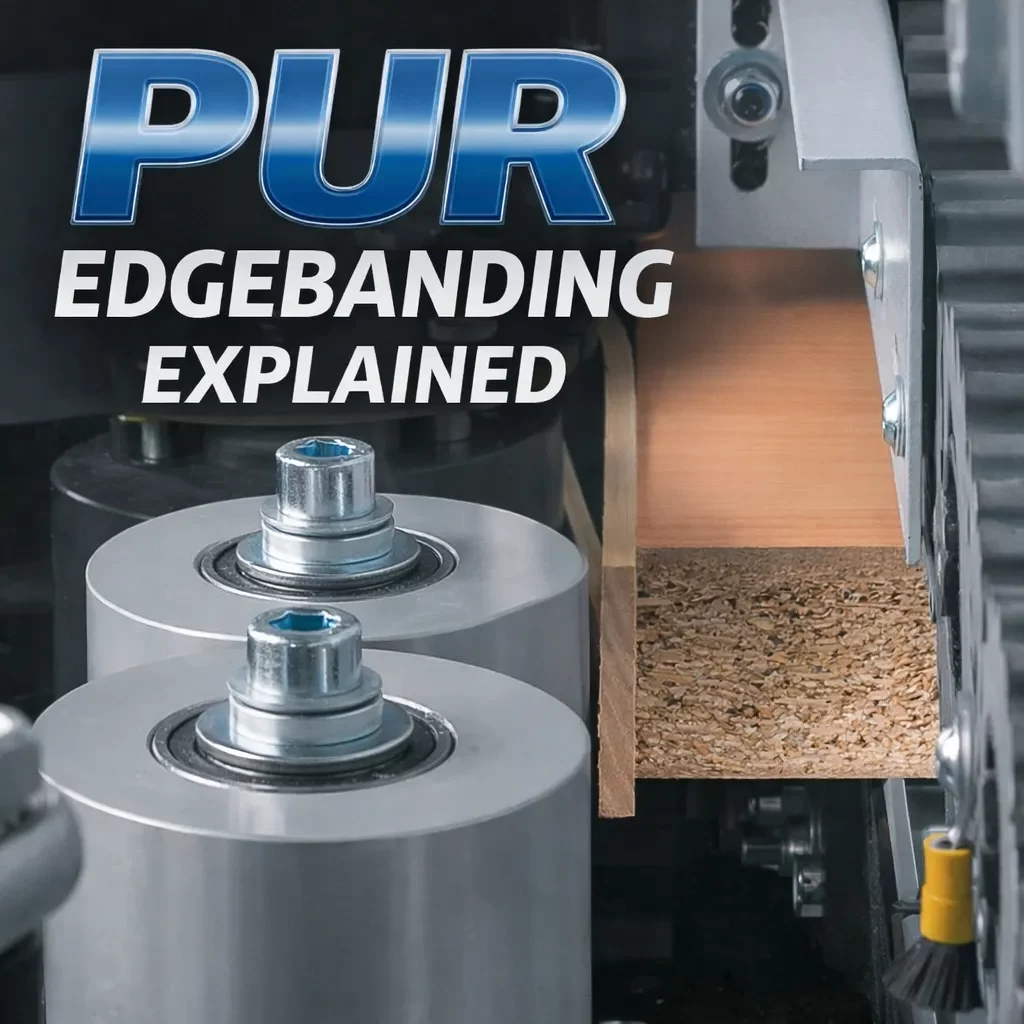
When it comes to custom carpentry, most homeowners focus on materials like plywood or particle board—but one critical detail is often overlooked:
👉 Edge banding
More specifically, PUR edge banding, which plays a major role in durability, moisture resistance, and overall build quality.
In this guide, we’ll explain what PUR edge banding is, how it works, and why it makes a difference in your carpentry.
🧩 1. What Is Edge Banding?

Edge banding is the process of sealing the exposed edges of boards (like particle board or plywood) with a thin strip of material.
Why it’s important:
- Covers raw edges
- Improves appearance
- Protects against moisture
- Enhances durability
👉 Without proper edge banding, boards are vulnerable to swelling, chipping, and damage.
🔬 2. What Is PUR Edge Banding?

PUR stands for Polyurethane Reactive adhesive.
Unlike traditional glue, PUR reacts with moisture in the air to form a strong, durable, and water-resistant bond.
Key Characteristics:
- Stronger adhesion
- Higher heat resistance
- Better moisture resistance
- Longer-lasting performance
👉 It is considered a premium upgrade over standard edge banding methods.
⚖️ 3. PUR vs Traditional Edge Banding (EVA)
| Feature | PUR | EVA (Standard Glue) |
|---|---|---|
| Bond Strength | ⭐⭐⭐⭐ | ⭐⭐ |
| Water Resistance | ⭐⭐⭐⭐ | ⭐ |
| Heat Resistance | ⭐⭐⭐⭐ | ⭐⭐ |
| Durability | Long-lasting | Moderate |
The key difference:
👉 EVA glue sits on the surface
👉 PUR glue chemically bonds into the material
💧 4. Why PUR Edge Banding Matters (Especially in Kitchens)

In areas like kitchens, moisture is unavoidable.
With standard edge banding:
- Water can seep into edges
- Boards may swell over time
With PUR edge banding:
- Edges are tightly sealed
- Moisture penetration is significantly reduced
👉 This is especially important for:
- Sink cabinets
- Lower kitchen units
- High humidity environments (like Singapore)
🛠️ 5. How PUR Works with Engineered Boards
Modern carpentry often uses engineered boards like particle board.
👉 When combined with:
- High-pressure laminate
- PUR edge banding
- Proper installation
These boards become:
✔️ Highly durable
✔️ Moisture-resistant
✔️ Suitable for most home applications
👉 Learn more in our Plywood vs Engineered Board: Which Is Better for Carpentry?
🔍 6. What Most Homeowners Don’t Realise
Two cabinets can look identical on the outside…
…but perform very differently over time.
👉 The difference often comes down to:
- Edge banding quality
- Glue type used
- Fabrication process
👉 To understand the full process, read How Custom Carpentry Is Made (Workshop Process).
🚫 7. Common Misconception
❌ “All edge banding is the same”
👉 Not true.
The adhesive used (PUR vs EVA) makes a significant difference in longevity and performance.
🏁 Final Verdict
🥇 Choose PUR Edge Banding if you want:
- Better moisture protection
- Stronger, longer-lasting cabinets
- Higher overall build quality
🥈 Standard edge banding:
- Lower cost
- Suitable for basic applications
💡 Final Thoughts
While materials like plywood or particle board often get the most attention…
👉 It’s the details like edge banding that truly determine long-term durability.
With PUR edge banding, you’re not just improving aesthetics—you’re investing in better protection and longer-lasting carpentry.