
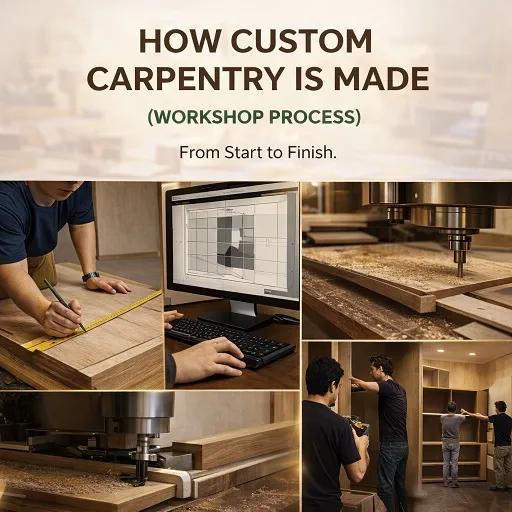
Custom carpentry isn’t just about design—it’s about precision craftsmanship behind the scenes. From raw boards to fully installed cabinetry, every piece goes through a structured workshop process to ensure durability, accuracy, and a premium finish.
In this guide, we’ll walk you through how custom carpentry is made step by step, so you understand what really happens before it reaches your home.
🧠 1. Design & Measurement (The Foundation)
Every carpentry project starts with accurate measurements and detailed planning.
What happens here:
- Site visit and precise measurement of walls, floors, and ceilings
- Identification of constraints (beams, pipes, uneven surfaces)
- Layout planning based on your needs and lifestyle
- Material and finish selection
👉 Even a few millimetres off can affect installation—this step is critical.
To understand pricing, refer to our Kitchen Cabinet Cost Guide in Singapore for a breakdown of materials and labour costs.
Get more inspiration designing your wardrobes—see our Wardrobe Interior Storage Ideas for practical configurations.
✏️ 2. Technical Drawings & Shop Drawings

After measurements, everything is translated into technical drawings.
Includes:
- Internal layout (shelves, drawers, hanging sections)
- Exact dimensions for each panel
- Hardware placement (hinges, tracks, mechanisms)
- 3D visuals (sometimes) for client approval
👉 This ensures zero guesswork during production.
3. Material Selection & Board Preparation

Once drawings are confirmed, materials are prepared.
Common materials:
- Plywood
- MDF
- Particle board with laminate finish
Process:
- Boards are selected and inspected
- Laminate or finishes are chosen
- Materials are cut into manageable sizes
👉 Quality of material directly impacts durability.
✂️ 4. Cutting & CNC Processing

This is where precision begins.
Methods:
- CNC machines for high accuracy
- Panel saws for straight cuts
What’s done:
- Panels are cut according to exact dimensions
- Grooves, holes, and joints are pre-machined
👉 CNC ensures consistency and reduces human error.
🧩 5. Edge Banding & Finishing

After cutting, panels go through edge finishing.
Why this matters:
- Covers raw edges
- Improves durability
- Enhances aesthetics
Process:
- PVC or ABS edge bands are applied
- Edges are trimmed and polished
👉 This step gives cabinets a clean, seamless look.
🔧 6. Assembly & Hardware Installation

Now the pieces come together.
Includes:
- Cabinet carcass assembly
- Installation of:
- Hinges
- Drawer runners
- Lift-up systems
👉 At this stage, the structure is fully formed.
🔍 7. Quality Check & Pre-Installation

Before delivery, everything is checked.
What’s inspected:
- Alignment of doors and drawers
- Smooth operation of hardware
- Surface finishing quality
- Structural stability
👉 This prevents issues during installation.
🚚 8. Delivery & On-Site Installation

Finally, the carpentry is installed in your home.
Process:
- Panels are transported carefully
- Installed and secured to walls
- Final alignment and adjustments
- Silicone sealing and finishing touches
👉 This step ensures everything fits perfectly on-site.
🧠 Why This Process Matters
Understanding the workshop process helps you:
- ✔️ Appreciate the craftsmanship behind custom carpentry
- ✔️ Know what you’re paying for
- ✔️ Set realistic timelines (typically 30–60 days)
- ✔️ Identify quality vs poor workmanship
💡 Common Mistakes to Avoid
- Rushing the design phase
- Choosing cheap materials
- Skipping detailed drawings
- Working with inexperienced carpenters
👉 These often lead to costly rework later.
🏁 Final Thoughts
Custom carpentry is a combination of design, engineering, and craftsmanship. Every step—from measurement to installation—plays a role in achieving a high-quality final product.
When done right, it results in furniture that is:
- ✔️ Tailor-made for your space
- ✔️ Durable and long-lasting
- ✔️ Visually seamless with your home
If you’re planning a renovation, understanding this process will help you make better decisions and work more effectively with your carpentry team. Check out our Walk-In Wardrobe Design Guide for layout and storage ideas.