
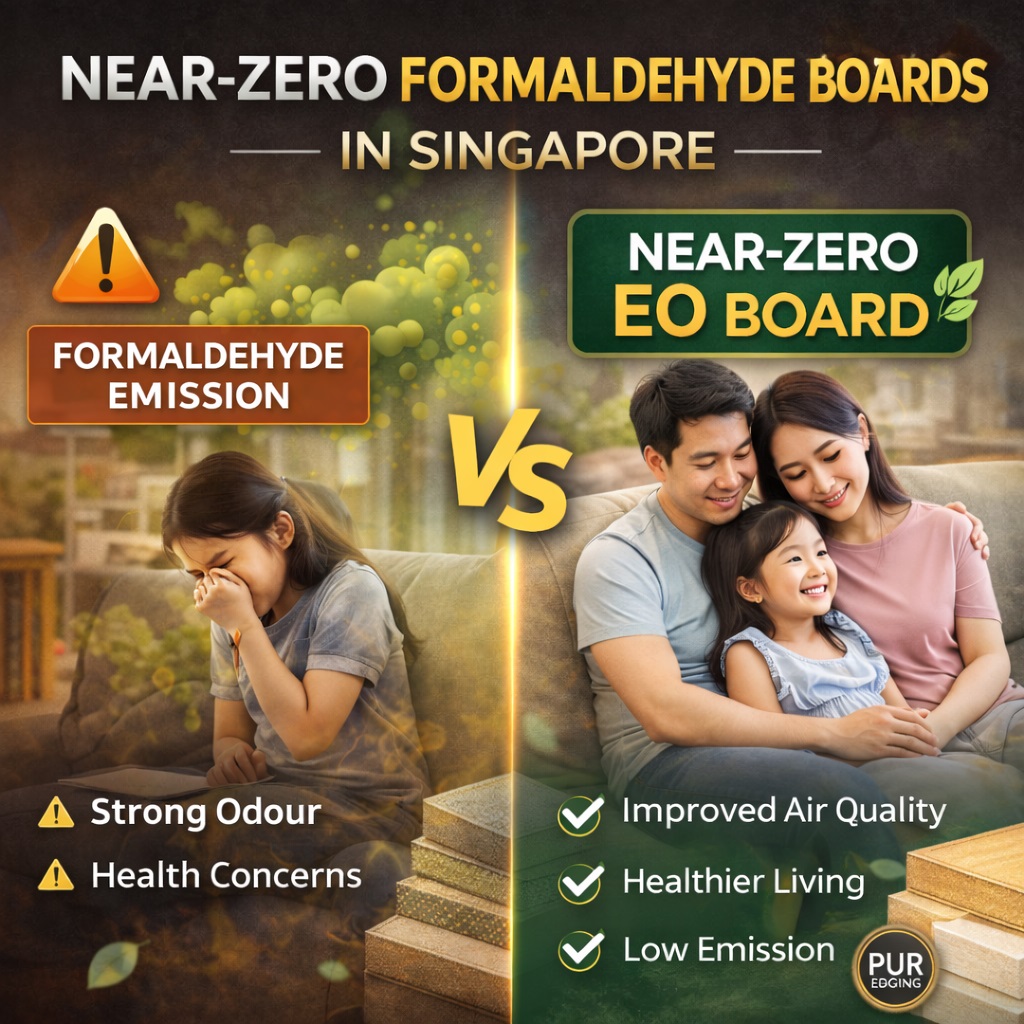
When renovating a home, most homeowners focus on design and cost. However, one critical factor often overlooked is indoor air quality — particularly formaldehyde emissions from carpentry materials.
In Singapore’s humid climate, enclosed indoor environments make air quality even more important. This guide explains what formaldehyde is, why it matters, and whether near-zero formaldehyde boards are worth the investment.
What Is Formaldehyde?
Formaldehyde is a chemical commonly found in adhesives used to bond wood particles in materials such as:
- Plywood
- Particleboard
- MDF
- Laminated boards
It helps strengthen boards and improve durability, but excessive emissions can affect indoor air quality.
Why Formaldehyde Levels Matter
Newly renovated homes sometimes emit a strong chemical smell, often caused by board adhesives and glue.
High formaldehyde exposure may cause:
- Eye, nose, and throat irritation
- Headaches
- Respiratory discomfort
- Long-term indoor air quality concerns
While regulated standards exist, lower-emission materials are increasingly preferred for healthier homes.
What Are Near-Zero Formaldehyde Boards?
Near-zero formaldehyde boards (often rated E0 or similar standards) are engineered to emit extremely low levels of formaldehyde.
Compared to standard boards, they offer:
- Reduced chemical odour
- Improved indoor air quality
- Safer long-term exposure levels
- Better environmental compliance
These boards are especially beneficial for families with children, elderly residents, or individuals sensitive to indoor air pollutants.
Are Near-Zero Boards Less Durable?
Modern engineered boards with low formaldehyde emissions are not weaker. In fact, high-quality engineered particleboard offers:
- Consistent density
- Stable structure
- Smooth finishing surface
- Strong laminate bonding
When combined with PUR edge banding, moisture resistance and durability are further enhanced.
You can read more in our Kitchen Cabinet Materials Guide.
Why Some Carpenters Still Use Standard Boards
Standard boards are typically:
- Lower cost
- More widely available
- Familiar to traditional carpentry workshops
However, lower-cost boards may emit stronger initial odours and may not prioritise indoor air quality to the same degree.
Milanla’s Approach to Healthier Carpentry
At Milanla, we prioritise both durability and safety by using engineered near-zero formaldehyde boards combined with PUR edging technology.
This approach provides:
- Improved indoor air quality
- Reduced post-renovation odour
- Stable cabinet alignment
- Cleaner finishing
- Long-term durability
We believe quality carpentry should protect both your home’s aesthetics and your family’s health.
You can also review our Carpentry Cost Singapore Guide to understand how material choice affects pricing.
Is It Worth Paying Slightly More?
Near-zero formaldehyde boards may cost slightly more than standard boards, but homeowners benefit from:
- Healthier indoor environment
- Better long-term comfort
- Reduced strong chemical smell after renovation
- Peace of mind
When renovation is a long-term investment, material quality becomes even more important.
Conclusion
Choosing near-zero formaldehyde boards is not just about premium materials — it’s about creating a safer and more comfortable living space. With modern engineered board technology, homeowners no longer have to compromise between durability and health.
If you are planning a renovation in Singapore, understanding material emissions helps you make a more informed and responsible decision.
👉 Request a carpentry consultation here: Contact