
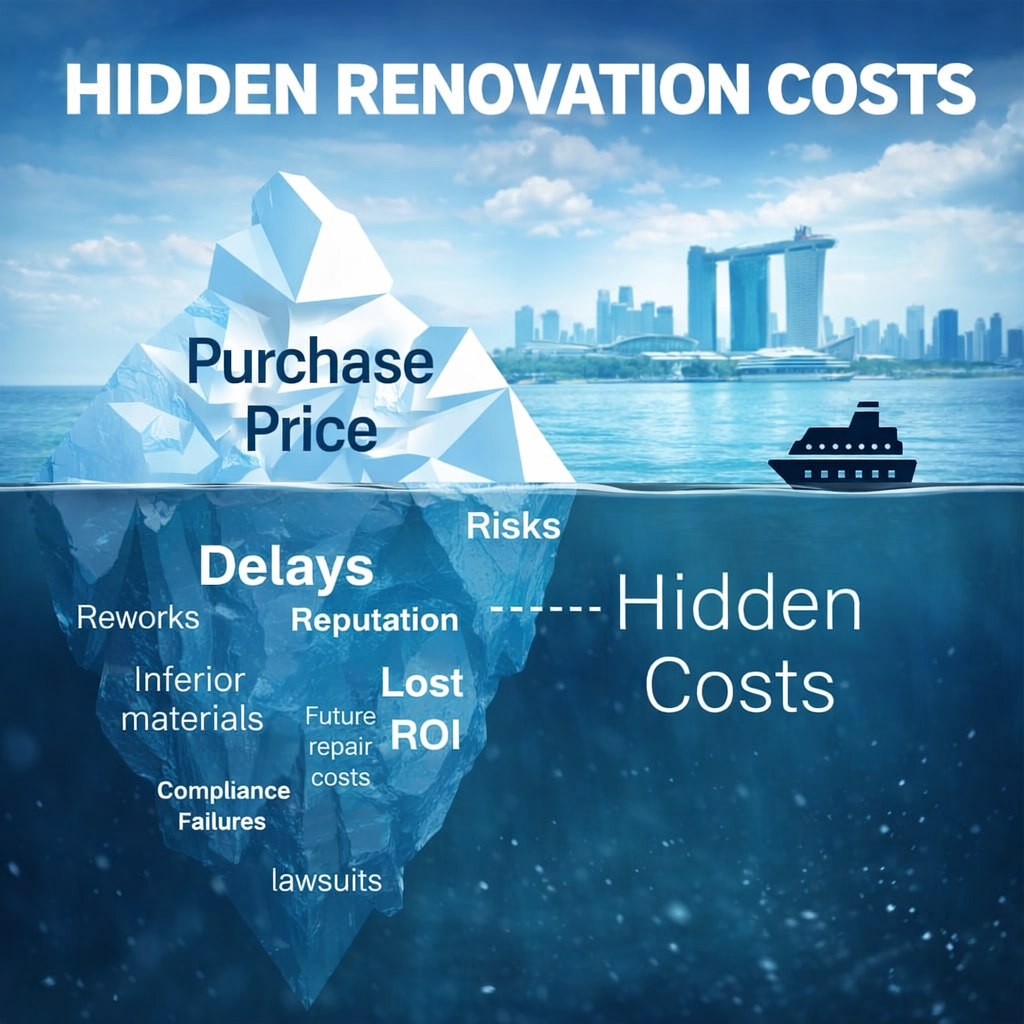
Many homeowners carefully plan their renovation budget, only to discover additional expenses during the renovation process. These hidden renovation costs can significantly increase the final bill if not anticipated early.
This guide explains the most common hidden renovation costs in Singapore and how you can prepare for them.
1. Electrical and Plumbing Adjustments
Older flats or layout changes often require additional electrical and plumbing work beyond the initial quotation.
Common extra costs include:
- Additional power points
- Lighting relocation
- Water pipe rerouting
- Replacement of ageing wiring or plumbing
These changes may only become apparent once hacking begins, which is why contractors sometimes cannot confirm the final cost earlier.
Before planning your overall budget, refer to our Home Renovation Cost in Singapore Guide for typical price ranges.
2. Structural or Surface Repairs
Once old tiles, cabinets, or walls are removed, hidden structural issues may be discovered, such as:
- Uneven flooring
- Damaged walls
- Water leakage problems
- Cracked concrete surfaces
Repairing these issues is necessary before continuing renovation works, which adds to the total cost.
3. Additional Carpentry Modifications
Homeowners frequently make design adjustments during renovation, which leads to extra carpentry work such as:
- Additional storage compartments
- Cabinet size adjustments
- Extra shelving
- Reinforcement for heavy appliances
These small changes may seem minor individually but can accumulate into significant additional costs.
Learn how proper planning can help reduce these surprises in our Renovation Checklist for Singapore Homes.
4. Permit and Administrative Fees
Certain renovation works require approvals or permits, particularly for:
- HDB hacking works
- Window replacements
- Gas pipe relocation
- Major plumbing modifications
Permit processing and compliance requirements may involve administrative fees not always included in basic quotations.
5. Material Upgrades
During the renovation process, many homeowners choose to upgrade materials after seeing samples or design mock-ups, for example:
- Upgrading cabinet laminates
- Choosing higher-grade countertops
- Installing premium hardware or hinges
- Selecting safer low-formaldehyde boards
These upgrades improve durability and safety but increase the total renovation cost.
6. Post-Renovation Costs
Some expenses only occur after renovation is completed, including:
- Professional post-renovation cleaning
- Furniture relocation
- Minor touch-ups or rectifications
- Additional décor installations
Setting aside a small contingency fund helps prevent financial stress during this phase.
7. How to Avoid Hidden Renovation Costs
You can minimise unexpected expenses by following these steps:
- Prepare a 10–15% contingency budget
- Finalise designs before renovation begins
- Request a detailed itemised quotation
- Conduct a thorough site inspection before work starts
- Work with experienced renovation professionals
You can also plan your renovation financing using our Renovation Payment Schedule Guide.
Why Transparent Quotation Matters
At iCarpenter, we emphasise clear, transparent quotations and early planning to help homeowners understand potential additional costs before renovation begins. Our structured consultation process ensures:
- Accurate project assessment
- Material cost clarity
- Clear payment milestones
- Minimal unexpected variations
👉 Request a personalised renovation consultation here: Contact Page
Conclusion
Hidden renovation costs are common, but they can be managed with proper planning and experienced guidance. By understanding the typical areas where extra expenses occur, homeowners can prepare realistic budgets and enjoy a smoother renovation journey.